


Featured Content
Register here for a conversation on how the cruise industry is reaching net-zero emissions goals and the economic impacts in Miami.
The words tourism and sustainability don’t usually go hand in hand. With a booming cruise industry, there are also impacts on the environment as current cruise ships can emit more carbon dioxide per passenger-kilometer than air travel.
The cruise lines, though, are pushing forward on their sustainability efforts – full steam ahead – and making some strides in reaching their net-zero emissions goal by 2050. Their efforts are not only making cruising more sustainable and enjoyable, but it’s also good business.
Miami is home to the largest cruise companies in the world, and PortMiami is the world's busiest cruise port, accommodating over 7.3 million passengers in 2023.
Join Opportunity Miami and The Miami-Dade Beacon Council on August 7th for a conversation with Rick Sasso, Chairman of MSC Cruises USA, on the future of the cruise industry, and the economic impacts on Greater Miami.

SUSTAINABILITY GOALS FOR CRUISING
MSC Cruises describes its sustainability goals as a long-term business commitment that can be reached by reducing emissions, protecting the ocean, and using resources more efficiently.
The company is on track to meet the International Maritime Organization carbon intensity goal of a 40% reduction from 2008 levels ahead of the 2030 milestone, and the goal is to reach net-zero greenhouse gas emissions by 2050 for its fleet.
LED lighting and heat recovery systems can conserve energy on their ships. Anti-fouling paint applied to the outer layer of boats can reduce fuel consumption. MSC ships also use desalination technology to convert seawater into clean drinking water. At least one ship is free of single-use plastic.
You can find more on the company’s 2023 Sustainability Report here.
SHORE POWER IN MIAMI
The other Miami-based cruise companies – Carnival Corporation, Norwegian Cruise Line Holdings, Royal Caribbean Group, and Virgin Voyages – have similar decarbonization strategies for reaching net-zero emissions by 2050. These efforts include shore power connections and ships powered by liquefied natural gas.
Shore power is already available at PortMiami, the first major cruise port on the U.S. eastern seaboard to offer this at all five cruise berths. Shore power allows ships to turn off their engines and plug into landside electrical power while docked. This helps to reduce emissions and noise. At PortMiami, nearly two dozen ships will be outfitted to use shore power.
MSC will have the largest terminal at PortMiami by 2050 and the largest ship to serve the U.S. powered by liquefied natural gas. They announced earlier this year that it was opening its North American headquarters in downtown Miami in a $100 million investment.
This “oceanside conversation” will be led by Beacon Council CEO Rodrick Miller. This event is part of Opportunity Miami’s ongoing series, “Conversations on our Future.” Space is limited, and you can register here.
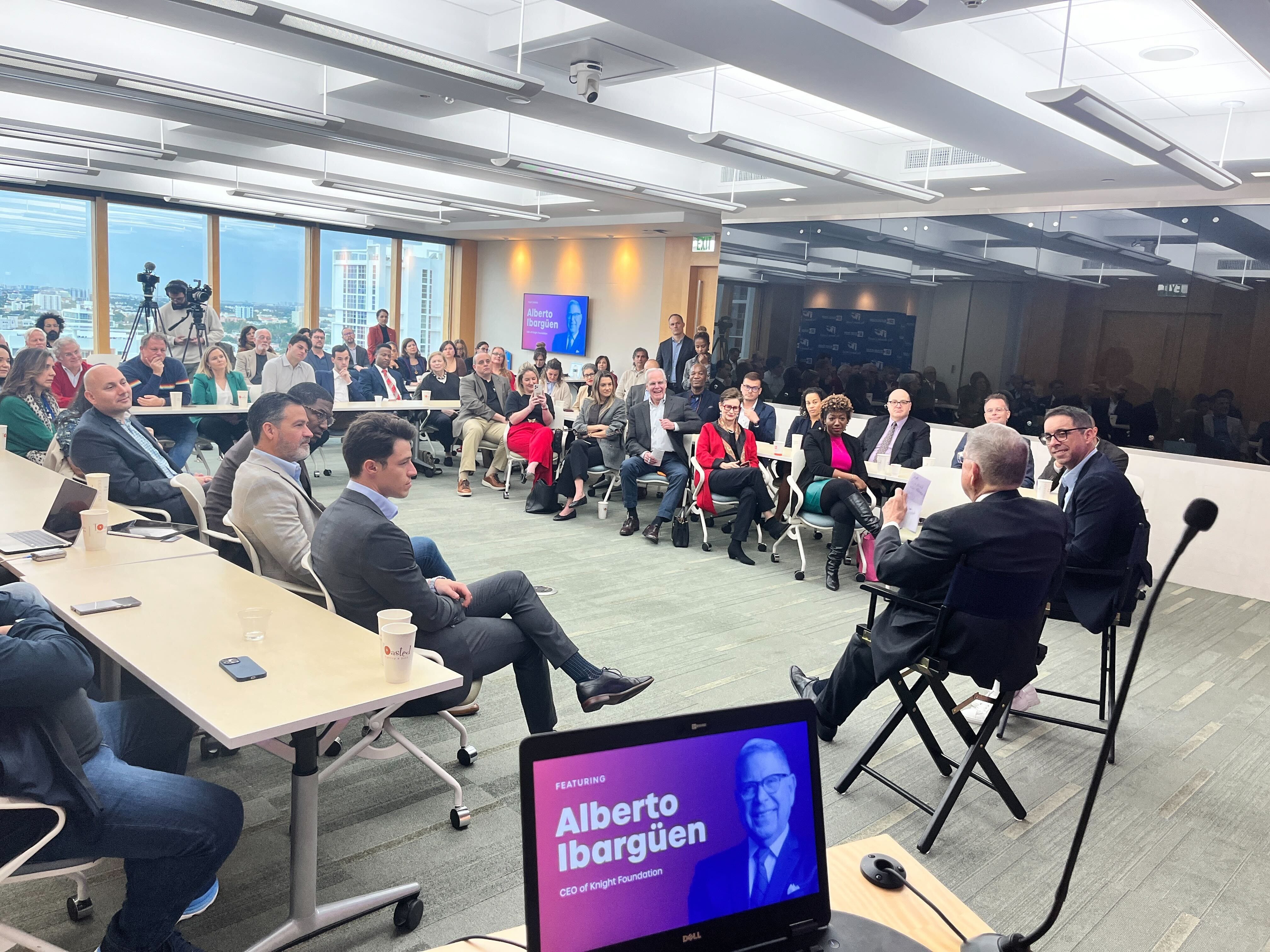
(Image above was from a previous Conversation on our Future with Alberto Ibargüen.)
PITCH US
If you have a company or entrepreneur to suggest or an idea to share that relates to building Miami’s future, email us at next@opportunity.miami. We invite you to subscribe to our YouTube channel and follow us on our social media channels. If you were forwarded this newsletter, you can subscribe by clicking here. And if you are new to Opportunity Miami, you can learn about our mission and work here.
Hope to hear from you.
– Suzette
